
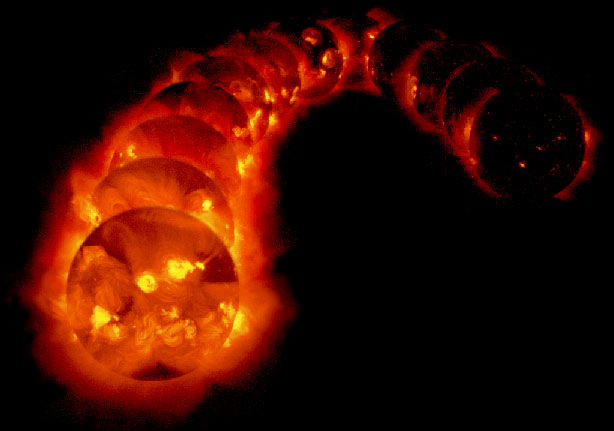
Variable Star Astronomy
The Khwarizmi Science Society find great pleasure in presenting a report of the Society’s spectacular achievements in the year 2009 and beyond, in celebrating the International Year of Astronomy (IYA). This was enabled by the seed grants received from the Emerging Nations Science Foundation (ENSF), the Canon Foundation for Scientific Research, the Pakistan Science Foundation and donations from individuals. With the help of this grant, the KSS was able to extend its activities, for the first time, outside Lahore and reach out into the remote and distant locations of Punjab and Khyber Pakhtoonkha. These melas have served around 10,000 schoolchildren, teachers and parents.
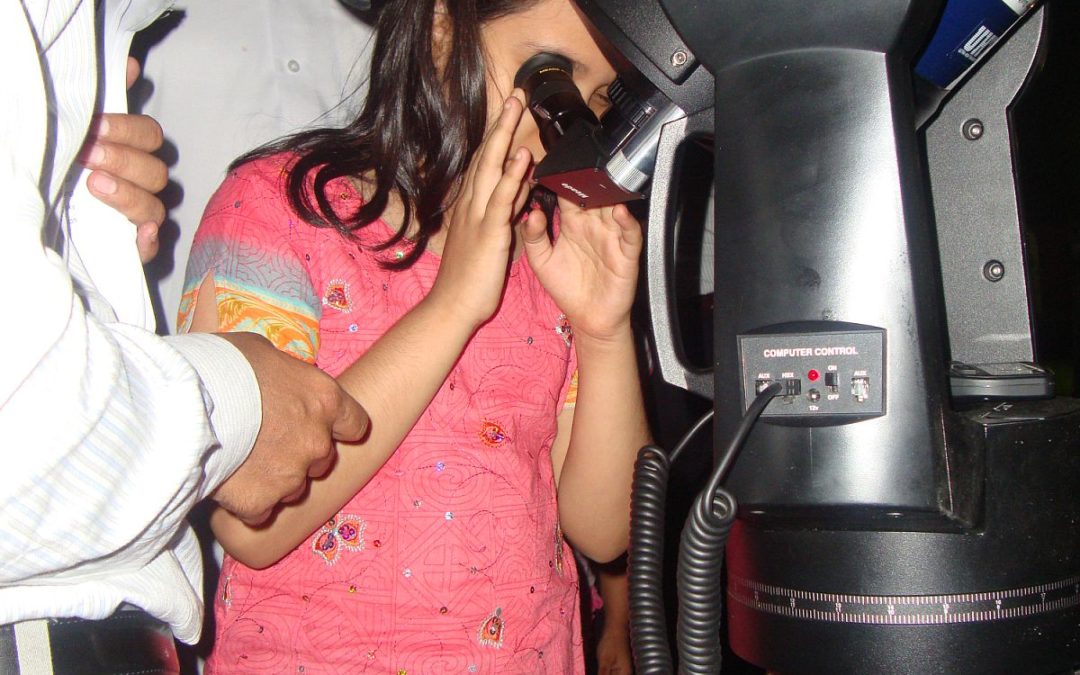
Jupiter, nebulae and star clusters: see them live
Come to our tenth falakyati mela, a part of the World Space Week organzied by SUPRACO. See the Jupiter, nebulae and star clusters. Visit stalls from various schools and have a refreshing evening, with the heavens.

Ninth Falakyati Mela in LUMS (Lahore)
We will have a great lunar landscape in the view with many important and stunning craters. Jupiter and its moons will also be visible around 20:15. Also I can show our nearest Andromeda Galaxy, Ring Nebula the famous star corpse and a very fine star cluster M13.
It will be a blessed night indeed when we can observe planets (including Venus if we can assemble our equipment well before sunset), star cluster, galaxy and a nebula. What else can we ask from a night sky!

High Energy Astrophysics and the Origin of Cosmic Rays
The origin of Galactic cosmic-ray ions has remained an enigma for almost a century. Although it has generally been thought that they are accelerated in the shock waves associated with powerful supernova explosions—for which there have been recent claims of evidence—the mystery is far from resolved. Cosmic rays, which are mostly protons, but also other ions and electrons, permeate our Galaxy and rain down on earth continuously, night and day. Although cosmic rays were discovered almost a century ago, back in the balloon age, their origins remain unclear even now. Almost no effort has been spared in pursuing this long-standing mystery: satellites, rockets and balloons have been launched, and enormous detector arrays have been installed on the ground and even under mountains and seas. I will give a historical overview of the search for the mysterious origin of cosmic rays and a report on the current status.